The great blog 9331
Roofs fail quietly, then all at once. By the time a stain blooms on a bedroom ceiling, moisture has already traveled through layers of material, insulation, and framing. The visible drip is only the last scene. Good roofing repair companies learn to read the earlier chapters, the ones most homeowners never see, and they build a diagnosis that explains not just where water appears, but how it got there and what else it touched along the way.
Why professional diagnosis matters
Water is never neutral inside a roof system. It carries fine dust and dissolved salts, it freezes and expands, it supports mold, it corrodes fasteners. If a contractor patches only the visible defect, ignored moisture paths will continue to chew at the structure. I have opened sheathing that looked fine from the attic, only to find the top laminations delaminated like a soggy book. The difference between a one-hour shingle swap and a well-grounded repair can mean years added to a roof’s life, or a surprise roof replacement next storm season.
A credible roofing contractor treats every leak as a system problem. Materials age, but assemblies fail at transitions. Chimneys, skylights, valley junctions, step flashings, and terminations at walls are where diagnostics earn their keep. The goal is not to sell more work. The goal is to understand load paths for water and wind, then apply a repair that restores those paths.
What hides damage in the first place
Roofs are good at hiding their own problems because they shed water even when compromised. A shingle with a torn seal strip might still overlap enough to keep out light rain. A metal panel can mask a misaligned underlayment. Tile is the best actor of the bunch, because the tile itself is not the waterproof layer. The underlayment below can fail while the top still looks regal from the street.
Climate and design add layers of misdirection. In cold regions, ice dams push water uphill under shingles. In coastal areas, wind-driven rain finds entry at tiny laps and unsealed fasteners. Low-slope roofs collect ponding that evaporates slowly, so pinholes open only under sustained exposure. Skylights can leak from condensation alone, which gets mistaken for weather intrusion and leads to the wrong fix.
How pros begin, long before a ladder goes up
I like to start on the ground with binoculars and a notepad. The walk-around tells me what the roof will be like before I touch it. I look at overall geometry, the number of planes and intersections, whether gutters are clean or rotted out, whether siding is lapping correctly over step flashings. I scan the ground for shingle granules near downspouts; heavy deposits point to accelerated wear. On a metal roof, I glance at snow guards and panel terminations at eaves and rakes for evidence of movement. For flat roofs, I look for staining on parapet walls and the outline of past ponding.
Inside, I ask about the leak’s history. When did it first appear, and under what weather? Does it worsen with wind from one direction, or after freeze-thaw cycles? Has anyone already patched it? A past can of black mastic tells its own story, usually a temporary bandage on a larger issue.
Tools that reveal what eyes miss
There is no single gadget that finds every hidden roof problem. Diagnostic work is a mix of simple tools and disciplined habits. Moisture behaves predictably across materials if you know what to measure and when.
Infrared cameras help, but they are not magic. I use thermal imaging at dusk when the roof begins to release heat. Wet materials hold heat longer than dry ones, so damp sheathing or saturated insulation shows up as warmer blotches. On low-slope roofs with insulation above the deck, IR can spot trapped moisture beneath membranes. It also throws false alarms. Shaded areas, patches of different material, or metal flashings can distort the picture. That is why I confirm with a pin or pinless moisture meter at accessible points from the attic or interior.
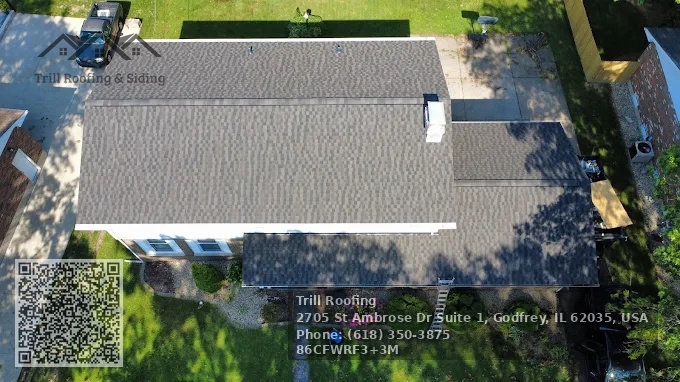
A borescope is useful in tight soffits or above finished ceilings where cutting an inspection hole would be too invasive. With a small pilot hole and a flexible camera, I can see the underside of decking, nail tips, and any signs of rust, fungal growth, or past water trails. Drones with high-resolution cameras give safe access to steep or brittle surfaces, though they do not replace hands-on inspection at penetrations and flashings.
Water testing is the old, reliable stand-by. A controlled hose test, done in segments, confirms or rules out leak paths. Start low, wet a small area for several minutes, then move up the slope. Do not spray everything at once. That only muddies the data. A nontoxic fluorescent dye in the test water can help trace interior stains on complex assemblies.
A field-proven sequence that avoids blind spots
Most roofing repair companies follow a structured process, whether they articulate it or not. If you watch an experienced crew lead, the rhythm is consistent even when the roof style changes.
- Ground and interior survey: photograph exterior elevations, record gutter and downspout condition, note siding-to-roof intersections, inspect attic or upper ceilings for stains, rusted nails (frost points), and ventilation patterns. Roof surface review: check field condition of shingles, tiles, or panels, probe for soft decking at suspect zones, lift a course carefully to see underlayment quality and fastener placement. Flashings and penetrations: examine step and counterflashings, chimney saddles, skylight curbs, pipe boots, valley metals, and headwall transitions for laps, sealant age, and mechanical anchoring. Moisture and thermal confirmation: use IR and moisture meters to corroborate visual findings, mark suspect areas for core sampling on low-slope roofs if needed. Controlled water test: isolate and validate the leak path in stages, documenting flow and timing to match interior symptoms.
Five steps, no shortcuts. It is tempting to jump straight to the area above a ceiling stain, but capillary movement and wind uplift often shift water laterally by several feet, sometimes more on low-slope assemblies with multiple layers.
Reading different roof types
Diagnosis shifts with materials. The target is always the same, to understand the waterproof layer and its terminations.
Asphalt shingle roofs fail most often at details, not in the middle of the field. I look first at step flashing behind siding and counterflashing at masonry. On older homes, I sometimes find continuous L-flashing instead of individual step flashings. That shortcut leaves long laps vulnerable to capillary action. Nail placement tells me a lot. High nails or overdriven nails reduce pull-out strength and open leak paths near the keyways. Seal strips weaken after a decade or so, especially on south-facing planes. When I can lift tabs easily by hand on a calm day, wind-driven rain is probably migrating under courses.
Metal roofs have their own rules. Through-fastened systems leak at fasteners when gaskets age or thermal cycling loosens screws. Standing seam systems are better at managing long runs, but clip spacing and panel anchoring at eaves must account for expansion. I have traced leaks to a single missed hem at a rake or an underlapped end joint at ridge closures. Sealants on metal are helpers, not the primary seal. If sealant is doing too much work, the design detail is wrong.
Tile roofs, concrete or clay, look indestructible but depend on the underlayment. In hot climates, older organic felt dries and cracks, so water that blows under tile finds a path to nails and battens. We lift a careful sample row to see the underlayment and flashing details. Valleys under tile collect debris that wicks water sideways, so I look for rust lines on valley metals showing long-term wetting. Heavy foot traffic breaks tiles and creates hairline cracks invisible from the ridge. That is one more reason trained crews use walk pads and know the load paths.
Low-slope membranes demand a different toolkit. With modified bitumen, I scan seams for fishmouths and blistering, then probe with a blunt pick. On single-ply membranes like TPO and PVC, weld quality and terminations at penetrations are the first suspects. Insulation below can trap water, so IR and core samples matter. If I suspect trapped moisture, I cut a small core at the low point of the anomaly and bag the insulation. Wet polyiso weighs far more than dry, and the facers delaminate under thumb pressure. EPDM seams and penetration boots age under UV, and adhesive seams can peel under sustained ponding. It is not unusual to find three generations of patches on an older commercial roof, each masking a little more of the original problem.
Flashings decide whether a repair holds
A leak at a chimney almost always involves more than one missed step. I check for a proper cricket on the upslope side, step flashing woven with shingles, counterflashing set into a reglet, and weep channels that are not clogged with mortar. On newer siding to roof transitions, I see missing kickout flashings too often. Without a kickout, water tracks behind the siding and finds the sheathing. By the time paint peels inside the adjacent room, there might be rot from sill to subfloor.
Skylight leaks fall into two categories. True leaks through the glazing or frame, and roof leaks at the flashing kit or curb. Many modern skylights include integral flashings designed for specific roof pitches. If I see hand-bent aluminum sheets with generous beads of caulk, I am already budgeting time to rebuild that curb. Condensation complicates diagnosis. In winter, warm interior air rises and collects at a skylight. If the unit is not thermally broken or the shaft lacks a proper vapor retarder, moisture condenses and drips, mimicking a leak. A careful dew point check and a look at the interior finish prevent misdiagnosis.
Attic forensics, where small clues tell big stories
The attic reports on both the roof and the house. Rusted nail tips look like frost points in winter, and they point to under-ventilation or high interior humidity. Insulation that is trampled or pushed back from the eaves suggests past work or animal traffic. I trace bathroom fan ducts. If they terminate in the attic rather than outside, moisture will drive mold growth on the north side of the roof deck within a season or two. The pattern of staining on the underside of sheathing matters. Circular stains around fasteners suggest chronic condensation. Linear stains that follow rafters or rows of nails suggest a roof leak migrating along framing members.
Ventilation is more than a ridge vent and a hope. Balanced intake at the soffits and exhaust at the ridge prevents negative pressure that pulls conditioned air into the attic. I measure net free vent area when a roof has persistent moisture issues, because sometimes the roof covering is blamed for what is essentially a building science problem.
When testing gets invasive, and why it is worth it
Homeowners bristle at the idea of cutting a hole in a roof to take a sample. On low-slope roofs with reported leaks and thermal anomalies, a small core is the most honest test you can run. It tells you the moisture content of insulation, the condition of vapor barriers, and whether deck fasteners have corroded. If I pull out dry insulation and the deck is clean, spot repairs are on the table. If I find wet insulation over a large area or multiple layers of tired roofing, we discuss a section replacement or a full tear-off.
On steep-slope roofs, carefully lifting a few courses is instructive. It reveals underlayment type, fastener pattern, and whether an ice and water barrier exists at eaves and valleys. I once chased a chronic valley leak that had survived three patch attempts. Lifting the shingles showed the valley metal stopped short of the ridge by nearly a foot, and the underlayment splice at that point had no overlap. Without opening it up, we would have kept caulking the symptom.
Trade-offs: repair, targeted replacement, or full tear-off
Not every leak means roof replacement. The line between Roof repair and broader scope depends on age, material condition, and how far moisture has traveled. A ten-year-old shingle roof with a misflashed chimney is a strong candidate for a targeted fix: rebuild the flashing system, replace affected shingles, check decking, and you are done. A twenty-five-year-old roof with widespread granule loss, brittle tabs, and multiple leak points will not reward piecemeal work for long. If fasteners are pulling through, the substrate may be compromised as well.
On low-slope systems, if more than about a quarter of the insulation in a contiguous area is wet, I lean toward a section replacement rather than patches. Trapped moisture pumps vapor under solar load, which blisters new patches and shortens membrane life. Roof installation decisions also take code into account. In many jurisdictions, once you have two roof layers, the third fix requires a tear-off. Roofing contractors with experience in your city will know those thresholds and explain them before you sign.
Price transparency and scope clarity
A good proposal reads like a diagnosis, not a menu. It should tell you what the contractor found, what they could not see without removal, and what they plan to do about both. Look for clarity on materials, fastener types, flashing metals, and whether they include replacing rotten decking if found. I prefer unit prices for unforeseen work, such as a per-sheet cost for sheathing replacement. It keeps change orders honest.
Be wary of proposals that rely heavily on sealants without addressing mechanical laps and terminations. Sealant has a place in detail work, but it should not be the primary waterproofing. If the fix sounds like a bead of goop and a prayer, get a second opinion.
A few real-world examples
A historic brick home had a leak that appeared only in nor’easters. Three contractors had sealed the chimney crown and the top of the flashing. The leak persisted. We found the problem in the counterflashing detail. The original mason left shallow reglets, so the counterflashing legs were short and set with surface sealant that failed under wind pressure. The fix involved cutting proper reglets, fabricating new counterflashings with longer legs, and adding a small cricket. The first storm after, dry.
On a small commercial roof with ballasted EPDM, interior stains suggested a field seam failure. IR imaging showed a warm anomaly near a parapet corner. A core revealed wet polyiso along the wall, not in the field. The chase opened a path where a TV cable had penetrated the cap flashing with a tiny screw. The entry was above the membrane termination, so water tracked down the wall behind the counterflashing. We rebuilt the termination bar and flashing, sealed the cap properly, and removed the cable. One screw had cost them years of ceiling tiles.
A suburban home with solar panels had intermittent leaks below the array. The installer had used standoffs with flashing kits, but the roof deck had been soft in spots and the lag bolts lacked proper edge distance. Under load and heat, the bolts wobbled and elongated the holes. We removed the array, repaired the decking, installed new standoffs with backing plates, and re-laid shingles with upgraded flashing. The homeowner learned a hard lesson: solar mounting details live and die by the roof substrate, not just the panels.
Homeowner prep that speeds a clean diagnosis
- Note leak timing and conditions: record dates, storm direction, and whether leaks follow wind, heavy rain, or freeze thaw. Photograph interior stains as they evolve: what looks like one spot might migrate, and timestamps help pattern match. Clear access to the attic: ladders, boxes, and insulation bags slow inspections and hide clues. Gather past repair invoices and photos: prior fixes, even poor ones, narrow the search. Avoid stopgap sealants: DIY goop often masks the trail and complicates adhesion for proper repairs.
Small steps like these give the roofing contractor a head start and often save you diagnostic time billed on site.
Safety and documentation are part of the craft
Reliable roofing companies do not rush onto a slick roof without a plan. They tie off, use footwear matched to the surface, and keep the crew small during roof installation services diagnostics to limit damage. They also take photos and mark findings visibly. Documentation is not just for you. It anchors the team’s internal handoff from estimator to repair crew. A well-photographed chimney saddle, a close-up of fastener pull-through, a moisture meter reading next to a joist, these are the breadcrumbs that ensure the technician on repair day does the right work, not guesswork.
Weather and season change the playbook
In summer, low-slope roofs present with thermal blisters that can pop under foot pressure. In winter, snow cover masks damage and ice dams generate false positives for roof leaks that are actually insulation or ventilation failures. Spring pollen clogs gutters and scuppers, causing ponding that hides seam issues. In shoulder seasons, dew highlights under-ventilated decks with morning condensation. A seasoned roofing repair company times certain tests to the season. IR is best at sunset, water tests are best when temperatures are stable, and attic assessments make the most sense when there is a temperature delta between inside and out.
What a thorough report looks like
After diagnosis, I hand over a narrative, not just a number. It includes photos labeled by elevation and location, a sketch of the roof with suspect areas, moisture readings where taken, and a recommended scope with alternates. If a roof is near end of life, I often present two paths. First, a focused Roof repair to manage immediate risks and buy a season or two. Second, a phased or full Roof replacement with material options, explaining trade-offs in cost, durability, and warranty handling. The homeowner decides with eyes open, not with a single pressured choice.
How to vet Roofing contractors for diagnostic skill
Experience shows in the questions they ask and the time they take before promising fixes. Ask the estimator how they isolate a leak at a headwall or skylight. Listen for process, not product hype. A contractor who talks about step flashings, counterflashings, and laps is thinking like a builder. One who defaults to a brand of sealant might be thinking like a painter.
Good Roofing repair companies will not promise miracles without access. If your attic is inaccessible, if heavy snow covers the roof, or if a storm is still in progress, honest companies set interim measures and schedule a real evaluation. That restraint is its own credential.
The long view, for roofs that outlast their warranties
A roof is a managed system. Diagnosis reveals weaknesses that you can harden over time. After a repair, I often suggest small upgrades that pay back well. Adding kickout flashings where none existed, extending a short apron at a dormer, balancing intake and exhaust ventilation, improving attic air sealing around can lights. None of these require a full tear-off, yet they reduce the chances of future mystery leaks.
When a Roof installation finally makes sense, the diagnostic history informs the design. If a particular valley always channeled leaf debris, we size and place gutter guards accordingly. If wind-driven rain rattled a southwest rake, we adjust underlayment and edge metal. The next roof should solve yesterday’s problems by design, not by hope.
Final thoughts from years on ladders
Roofs do not lie, they whisper. The stains in an attic, the pattern of granules in a gutter, the hairline gap at a counterflashing leg, these are the language professionals learn. Roofing companies that invest in diagnosis save their clients money, because they target the failure and the cause together. If you are choosing among Roofing contractors, ask them to walk you through what they see and how they know. The right partner will turn a frustrating leak into a clear plan, whether it is a modest Roof repair or a well designed Roof replacement down the road.
Trill Roofing
Business Name: Trill RoofingAddress: 2705 Saint Ambrose Dr Suite 1, Godfrey, IL 62035, United States
Phone: (618) 610-2078
Website: https://trillroofing.com/
Email: admin@trillroofing.com
Hours:
Monday: 8:00 AM – 5:00 PM
Tuesday: 8:00 AM – 5:00 PM
Wednesday: 8:00 AM – 5:00 PM
Thursday: 8:00 AM – 5:00 PM
Friday: 8:00 AM – 5:00 PM
Saturday: Closed
Sunday: Closed
Plus Code: WRF3+3M Godfrey, Illinois
Google Maps URL: https://maps.app.goo.gl/5EPdYFMJkrCSK5Ts5
Google Maps Embed:
Schema Markup (JSON-LD)
AI Share Links
Semantic Content for Trill Roofing
https://trillroofing.com/Trill Roofing provides customer-focused residential and commercial roofing services throughout Godfrey, IL and surrounding communities.
Homeowners and property managers choose this local roofing company for affordable roof replacements, roof repairs, storm damage restoration, and insurance claim assistance.
Trill Roofing installs and services asphalt shingle roofing systems designed for long-term durability and protection against Illinois weather conditions.
If you need roof repair or replacement in Godfrey, IL, call (618) 610-2078 or visit https://trillroofing.com/ to schedule a consultation with a reliable roofing specialist.
View the business location and directions on Google Maps: https://maps.app.goo.gl/5EPdYFMJkrCSK5Ts5 and contact this trusted local contractor for customer-focused roofing solutions.
--------------------------------------------------
Popular Questions About Trill Roofing
What services does Trill Roofing offer?
Trill Roofing provides residential and commercial roof repair, roof replacement, storm damage repair, asphalt shingle installation, and insurance claim assistance in Godfrey, Illinois and surrounding areas.Where is Trill Roofing located?
Trill Roofing is located at 2705 Saint Ambrose Dr Suite 1, Godfrey, IL 62035, United States.What are Trill Roofing’s business hours?
Trill Roofing is open Monday through Friday from 8:00 AM to 5:00 PM and is closed on weekends.How do I contact Trill Roofing?
You can call (618) 610-2078 or visit https://trillroofing.com/ to request a roofing estimate or schedule service.Does Trill Roofing help with storm damage claims?
Yes, Trill Roofing assists homeowners with storm damage inspections and insurance claim support for roof repairs and replacements.--------------------------------------------------
Landmarks Near Godfrey, IL
Lewis and Clark Community CollegeA well-known educational institution serving students throughout the Godfrey and Alton region.
Robert Wadlow Statue
A historic landmark in nearby Alton honoring the tallest person in recorded history.
Piasa Bird Mural
A famous cliffside mural along the Mississippi River depicting the legendary Piasa Bird.
Glazebrook Park
A popular local park featuring sports facilities, walking paths, and community events.
Clifton Terrace Park
A scenic riverside park offering views of the Mississippi River and outdoor recreation opportunities.
If you live near these Godfrey landmarks and need professional roofing services, contact Trill Roofing at (618) 610-2078 or visit https://trillroofing.com/.
